Pet owners often say their puppies aren’t interested in toys. As an expert in the pet supplies industry, I completely understand their frustration — but I can’t help but smile a little inside. After all, toys are meant for playing — the more often a puppy plays, the faster toys wear out. If a toy stays perfectly intact after purchase, it’s no longer a toy — it’s furniture. And that’s the real waste of money.

How Important Are Toys for Puppies?
Toys help prevent unwanted behaviors like destructiveness and anxiety. The well-behaved dog we dream of might just be played into existence!
Playing together strengthens the bond between pets and their owners. If you become your puppy’s favorite playmate, would they ever want to leave your side?
Toys also meet a puppy’s natural instincts and enrich their daily life. A dog’s life is short — let’s make sure they live it happily and fully.
What Kinds of Toys Do Puppies Need?
Puppies need a variety of toys, chosen based on their individual personalities. No matter what, offering different types is essential. Here’s a breakdown:
Chew Toys
Puppies naturally love to chew. Chewing releases endorphins that calm and comfort them, easing boredom, stress, and anxiety. Chew toys exist for this reason, so material choice matters. Later, I’ll introduce some common toy materials to help you choose wisely.
Tug-and-Teardown Toys
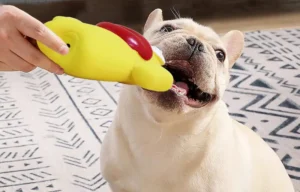
Many puppies retain strong prey drives, especially terrier breeds. They love chasing and “killing” their “prey.” Toys made for tugging and tearing — like stuffed animals, plush toys, and squeaky toys — satisfy these instincts.
If you’ve seen your puppy rip apart a squeaky toy, find the sound device, destroy it, and lose interest afterward, it’s because — in their mind — the “prey” died once it stopped making noise.
Treat-Dispensing & Snuffle Toys
Puppies enjoy searching for food. Treat-dispensing balls and snuffle mats tap into this love for hunting.
In the wild, animals forage — they don’t eat from bowls. When we feed our dogs from a bowl, we strip away that instinctual satisfaction. Meals that end in minutes leave puppies bored, leading to destructive behaviors.
Introducing diverse feeding methods restores this natural joy. However, keep difficulty levels appropriate. Start easy to build confidence, and gradually increase the challenge. Overly hard puzzles can frustrate puppies, causing them to give up or develop behavioral issues.
The toys above let puppies play independently. Now, let’s look at two toy types that involve you:
Fetch Toys
Balls and frisbees create teamwork between dog and owner.
Breeds like Labradors and Golden Retrievers often obsess over fetch — retrieving taps into their original job of bringing back game for hunters, giving them immense satisfaction.
Some Border Collies also love fetch. However, Border Collies are herding dogs by nature. They instinctively chase and control moving objects, seeing a flying frisbee more like a runaway sheep than a fun toy. Forced fetch games can slowly build stress and anxiety in some Border Collies rather than joy.
Tug-of-War Toys
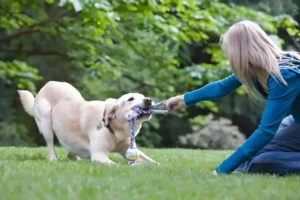
Tug-of-war also satisfies a puppy’s hunting instincts. A stationary toy seems boring, but when you pick up the other end and make it “escape,” the toy suddenly becomes irresistible.
Puppies might growl during play — but playful growls differ from aggressive ones. Learning the difference matters.
One critical rule for tug-of-war: always let the puppy win. Success boosts their confidence and makes the game more rewarding.
Recommended Toy Materials
Today’s market offers countless toy choices. Generally:
- Rubber and rope toys suit chewing needs.
- Plush and stuffed toys, especially squeaky ones, work great for tugging and tearing — the more prey-like, the better.
Regardless of material, rotate toys regularly.
For example, I once bought seven or eight toys at once. Each day, I only offered two or three. After playtime or meals, I would put them away and rotate in different ones the next day.
Leaving toys out all the time often leads to boredom — or even resource guarding.
But My Puppy Just Doesn’t Like Toys
Some puppies seem uninterested in toys at first. The good news? You can teach them how to enjoy toys!
Learning to play prevents many behavioral problems and adds extra joy to your dog’s life.
Common Reasons Puppies Don’t Like Toys
- Material preference: The texture might not appeal to them.
- Wrong size: Toys that are too large frustrate puppies; toys that are too small pose choking risks. Choose carefully.
- Tug-of-war confusion: Your body language might intimidate the puppy, or the toy’s movement may not mimic prey.
- Difficulty level: Overly hard treat-dispensing toys or snuffle mats discourage persistence.
- Unappealing rewards: Boring treats make the effort seem pointless.
Building Good Play Habits
- Start calmly: Don’t hand toys to a jumping, overly excited puppy — it teaches bad habits.
- Control the ending: Set a clear end-of-play signal like “OK, take a break” or “All done.”
- Moderate the play: Especially during fetch and tug-of-war, teach your puppy to pause before getting overstimulated.
- Let them win: In tug-of-war, always let the puppy “win” — boosting their confidence is the whole point of the game.